
Getting Started with No-Dig Gardening: A Beginner Permaculturist’s Guide
I created a no-dig garden bed to grow MUSHROOMS in my suburban garden

Permaculture embraces systems thinking—a holistic lens that examines the interconnections between natural and human systems. A no-dig garden exemplifies this philosophy by mimicking natural processes, reducing inputs, and promoting self-sustaining ecosystems. It offers a simple yet profound way to embark on your permaculture journey while building healthy soil, encouraging biodiversity, and conserving resources.
This article explores the no-dig gardening method through a systems-thinking perspective, highlighting its role as a foundational practice for creating sustainable landscapes.
Understanding No-Dig Gardening Through Systems Thinking
At its core, no-dig gardening leverages ecological principles, recognising the soil as a living system teeming with microorganisms, fungi, and insects. By avoiding disruption of this ecosystem, no-dig gardening maintains the intricate soil food web, which facilitates nutrient cycling and supports plant growth. Rather than imposing external control, the method nurtures the natural processes that sustain the soil over time.
In traditional gardening, digging and tilling disrupt the soil's natural layers, leading to compaction, loss of organic matter, and erosion. No-dig gardening, in contrast, works with natural cycles by layering organic materials on the soil surface, mimicking the way forests build soil over time through falling leaves and decomposing plant matter. This method enhances resilience while reducing the labour and inputs required for a thriving garden.
The Benefits of No-Dig Gardening in a Permaculture Context
Adopting a no-dig approach has numerous ecological and practical benefits:
Enhances Soil Health
By layering organic materials like compost, leaves, and straw, a no-dig garden fosters a thriving soil ecosystem. This practice feeds microorganisms and earthworms that break down organic matter, releasing nutrients into the soil and improving its structure over time.Reduces Soil Disturbance
Maintaining the integrity of the soil layers protects the natural habitat for soil organisms. This ensures uninterrupted biological activity, which is essential for nutrient retention, water infiltration, and plant root health.Increases Biodiversity
No-dig gardening promotes a rich diversity of soil life, which benefits the above-ground ecosystem. Pollinators, beneficial insects, and birds are attracted to the garden, further contributing to pest control and pollination.Prevents Soil Erosion and Compaction
Layers of organic material act as a protective mulch, shielding the soil from the effects of wind and rain. This prevents erosion and compaction, maintaining ideal conditions for root growth.Saves Time and Effort
Unlike traditional gardening, which involves heavy digging, tilling, and fertilising, a no-dig system requires less physical labour. The garden builds itself as natural processes do the work of decomposition.
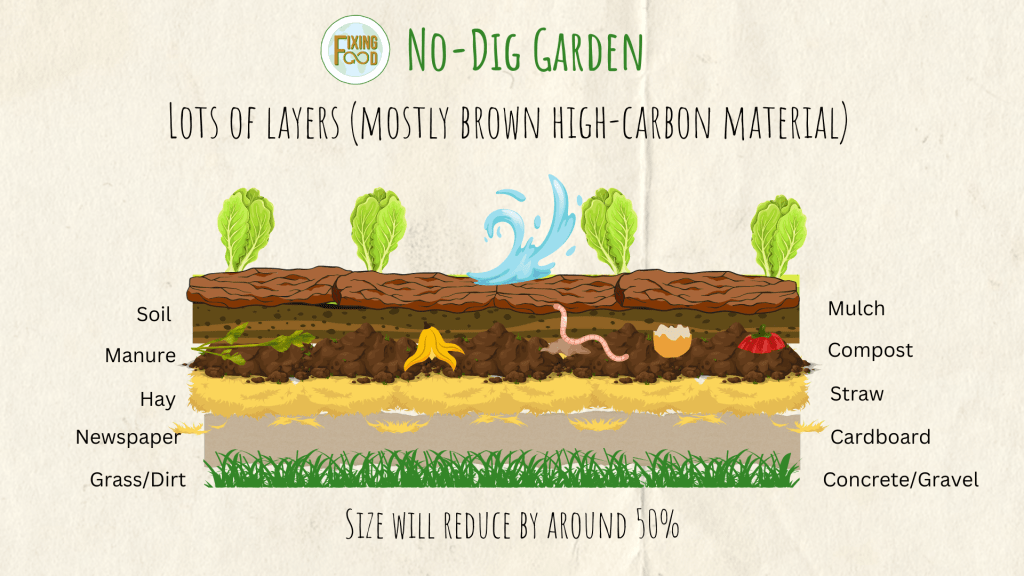
Steps to Create a No-Dig Garden
A no-dig garden system is easy to set up and adapt to various goals, whether you're growing vegetables, herbs, or establishing a food forest.
Select a Suitable Site
Choose a sunny location with good drainage. If the area is overgrown with grass or weeds, no-dig gardening offers an excellent way to convert it into fertile ground.Lay a Weed-Suppressing Layer
Start with a base layer of cardboard or newspaper to suppress existing weeds and grass. This barrier prevents regrowth while gradually decomposing to enrich the soil.Add Layers of Organic Materials
Build the garden by layering organic matter:Compost: A nutrient-rich layer to feed the soil.
Manure or Food Scraps: Provide additional nutrients and energy for decomposers.
Mulch Layer: Add straw, hay, or wood chips to retain moisture, regulate temperature, and prevent weed growth.
Water Thoroughly
Soak each layer to accelerate decomposition and ensure the materials bind together.Allow Time for Decomposition
Depending on your climate and the materials used, allow the organic layers to break down over several weeks to months. This process transforms the layered garden into a rich, crumbly soil.Plant Your Garden
Once the layers have decomposed, plant directly into the top layer. Use a diverse mix of plants to enhance biodiversity and ecosystem function.
Scaling Systems Thinking: Expanding No-Dig Gardens
The no-dig method scales easily, making it suitable for diverse permaculture systems:
Raised Beds: Create manageable plots for intensive vegetable gardening.
Food Forests: Use no-dig techniques to establish tree guilds, layering organic material around young trees to replicate forest ecosystems.
Community Spaces: Apply no-dig gardening to community gardens, encouraging collective stewardship and sustainable practices.
These approaches align with permaculture’s ethics—earth care, people care, and fair share—while fostering regenerative ecosystems.
No-Dig Gardening as a Catalyst for Systemic Change
Beyond the physical benefits, no-dig gardening encourages a mindset shift. It demonstrates that working with nature, rather than against it, yields abundant results. By focusing on relationships within the system—soil, plants, microorganisms, and humans—this method promotes resilience and long-term sustainability.
No-dig gardening also contributes to climate action by sequestering carbon in organic matter and reducing the emissions associated with synthetic fertilisers and mechanised tilling. These benefits make it an essential strategy for creating urban gardens that serve as microcosms of ecological restoration.
No-dig gardening is more than a technique; it’s a systems-based approach that aligns with permaculture principles to restore balance and resilience to urban and rural landscapes. By investing in soil health and mimicking nature's cycles, no-dig gardens become thriving ecosystems that nourish plants, wildlife, and people alike.
As you begin your permaculture journey, let no-dig gardening be the foundation for sustainable, interconnected systems that not only produce food but also regenerate the environment. The simplicity and effectiveness of this method make it accessible to gardeners of all levels, paving the way for healthier soils, stronger communities, and a brighter ecological future.